Atiku Abubakar’s PDP Exit: A Familiar Chapter in a Career Marked by Political Crossings

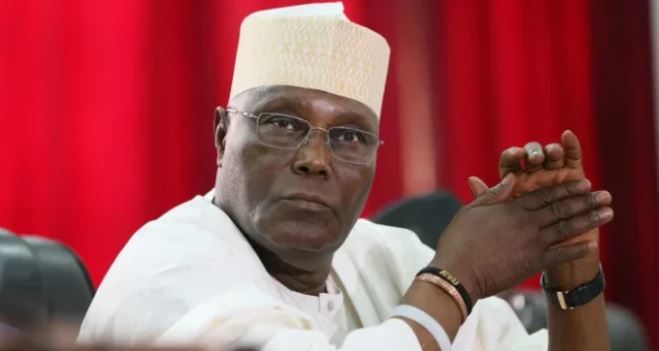
Abuja, July 16, 2025 — In yet another twist in Nigeria’s ever-fluid political landscape, former Vice President Atiku Abubakar has officially resigned from the Peoples Democratic Party (PDP), citing “irreconcilable differences” with the party’s current direction. His departure marks a significant moment for the PDP—and a familiar maneuver for the veteran politician whose career has been defined by strategic party shifts.
“I find it necessary to part ways due to the current trajectory the party has taken, which I believe diverges from the foundational principles we stood for,” Atiku said in his resignation letter dated July 14, 2025.
The move, though dramatic, comes as no surprise to political observers. This is the sixth high-profile party switch for the former vice president, who has become synonymous with political reinvention in Nigeria’s Fourth Republic. As the 2027 election draws closer, his latest exit is already sparking speculation about a new opposition realignment.
A Timeline of Atiku’s Political Crossings
🔹 1999–2006: PDP (Vice President Era)
Atiku began his national political journey with the PDP, becoming Vice President under President Olusegun Obasanjo from 1999 to 2007. His time in office was marked by influence—and internal strife—particularly over Obasanjo’s third-term ambition.
🔹 2006: PDP ➤ Action Congress (AC)
Following a well-publicized fallout with Obasanjo, Atiku defected to the Action Congress in 2006 to contest the 2007 presidential election. He lost to PDP’s Umaru Musa Yar’Adua.
🔹 2009: AC ➤ PDP (Return)
In 2009, Atiku returned to the PDP after a political rift with AC leader Bola Tinubu. He unsuccessfully sought the PDP presidential ticket for the 2011 election, losing to Goodluck Jonathan.
🔹 2014: PDP ➤ All Progressives Congress (APC)
Citing internal democracy issues within the PDP, Atiku defected to the newly-formed APC in 2014. Though he lost the party’s presidential primary to Muhammadu Buhari, the APC went on to defeat Jonathan in the 2015 elections.
🔹 2017: APC ➤ PDP (Again)
In 2017, Atiku returned to the PDP, accusing the APC of failing Nigerians. He clinched the party’s ticket for the 2019 election but was defeated by incumbent President Buhari.
🔹 2025: PDP ➤ New Platform (ADC Coalition)
Amid renewed internal crisis, leadership disagreements, and a failed 2023 bid against President Tinubu, Atiku has now exited the PDP once more. Though he hasn’t announced a new party, he has thrown his weight behind the African Democratic Congress (ADC), now rebranded as the platform for a “Third Force” coalition featuring Peter Obi, David Mark, and other disaffected political actors.
What’s Next?
Atiku’s departure reflects deepening rifts within the PDP, especially after the 2023 loss and unresolved issues around power rotation and internal governance. The emerging coalition—likely to be anchored by the ADC—aims to present a united front against Tinubu’s re-election bid in 2027.
Political watchers suggest this could herald a new political bloc, potentially altering the traditional APC–PDP binary. With Atiku, Obi, and other influential figures reportedly in talks, the groundwork is being laid for a formidable challenge to the ruling establishment.
2027 Race: Makinde Says Atiku’s Exit ‘Liberation’ for PDP, ADC Coalition No Threat
Final Word
Atiku Abubakar’s resignation from the PDP underscores not only his enduring presence in Nigerian politics but also the instability plaguing major parties. As history shows, his political moves are rarely impulsive—they are calculated steps toward another shot at Nigeria’s highest office. Whether the sixth time’s the charm remains to be seen.